


Managing brambles to encourage woodland ground flora
Brambles can smother young trees and wildflowers, but they also provide valuable habitat. Manage them carefully to balance wildlife needs with woodland regeneration.

Brambles are a familiar sight in British woodlands, hedgerows and rough ground. Their tangled stems and thorny nature can be frustrating, but they are also one of our most valuable wildlife plants. The key is not to eradicate them, but to manage them so that they don't overwhelm the woodland floor. With a little patience and the right techniques, you can encourage a richer ground flora while still leaving space for the birds, mammals and insects that depend on brambles.
The dual nature of brambles
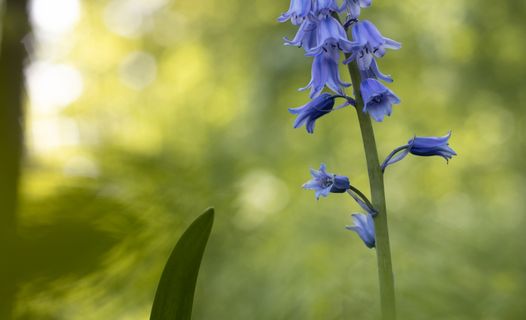
Brambles (Rubus fruticosus aggregate) provide dense cover for nesting birds such as wrens, blackcaps and whitethroats. Their flowers are a magnet for bees, hoverflies and butterflies in summer, and the autumn berries feed thrushes, blackbirds, dormice and even foxes. In winter, the tangled stems offer shelter from the worst of the weather. Yet when brambles grow unchecked, they form impenetrable thickets that shade out bluebells, wood anemones, primroses and other woodland ground flora. Young tree seedlings, from oak to hazel, are smothered before they can establish. The result is a woodland with little diversity beyond the bramble itself.
Assessing your woodland's bramble problem
Before you reach for the loppers, take a walk through your woodland and note where brambles are dominant. Are they spreading from a neglected edge? Have they taken over a former clearing? Look for signs of desirable ground flora – even a few scattered bluebell leaves or dog's mercury – because these indicate a seed bank worth saving. Also check for wildlife: active bird nests, dormouse nests (a woven ball of honeysuckle bark and grass), or hedgehog hibernation sites. Brambles are often a symptom of increased light, such as after tree thinning or storm damage. Understanding why they are thriving will help you decide how much to remove and where to start.
Methods for managing brambles
There is no single right way to tackle brambles. The method you choose depends on the size of the patch, your tools, and how much time you have.
- Cutting: Use a brushcutter, loppers or a clearing saw to cut stems close to the ground. This is quick for large areas but will regrow unless repeated. For small patches, hand tools give you more control.
- Digging out root crowns: A mattock or spade can lever out the woody root balls. This is hard work but effective for small, isolated clumps. Remove as much of the crown as possible – any fragments left behind will sprout.
- Repeated cutting: Cut regrowth when it reaches 30–45 cm, several times in a growing season. This exhausts the root reserves. It works well in sensitive areas where digging would damage ground flora.
- Smothering: In small areas, cover cut stumps with thick cardboard or woven landscape fabric, weighted down with logs or stones. Leave for at least two growing seasons. This is useful around newly planted trees.
- Conservation grazing: If you have livestock, pigs or goats can root out brambles, but they also damage ground flora and soil. Use only on a rotational basis and never where rare plants grow.
Timing your bramble control
The best time to cut brambles is late winter, from early February to mid-March, before birds nest and before new growth begins. At this time, the ground is often soft, making digging easier, and you can see the structure of the thicket. Avoid cutting between March and August, when nesting birds and hibernating mammals may be present. If you must cut in summer, check carefully for nests and move slowly. Cutting in autumn, after the berries have been eaten, is possible but you will lose the winter shelter value. A good compromise is to cut one section each year on a rotation, leaving other patches to fruit and provide cover.
Helping ground flora return
Once brambles are reduced, ground flora may return on its own from seeds or dormant roots in the soil. Give it a chance: avoid disturbing the soil more than necessary, as this exposes buried bramble seeds to light and triggers a new flush. If nothing appears after a season, you may need to introduce plants. Collect seed or small plug plants from a nearby donor site of similar soil and aspect – with the landowner's permission, of course. Bluebells, wood anemone, wild garlic, primrose and foxglove are all good candidates. Plant them in small groups, and water them in dry spells. In heavy shade, you may need to thin the tree canopy slightly to let more light through. Be patient: woodland ground flora can take several years to establish.
A mosaic approach for long-term balance
The goal is not a bramble-free woodland, but a mosaic of habitats. Aim to keep brambles at around 20–30% cover in a woodland, concentrated in sunny edges, clearings and along rides. This provides food and shelter for wildlife without smothering the woodland floor. Cut back brambles around the bases of young trees you want to keep, but leave other patches alone. Rotate your management: cut one area, leave another for three or four years, then swap. This mimics natural disturbance and keeps the habitat diverse. With careful, patient management, your woodland will reward you with a carpet of spring flowers, the hum of insects, and the knowledge that you are helping both wildlife and woodland regeneration.
Post a comment